For the past few years, vibrant green drinks have completely dominated our morning routines and social media feeds, leaving other hot beverages firmly in the shade.
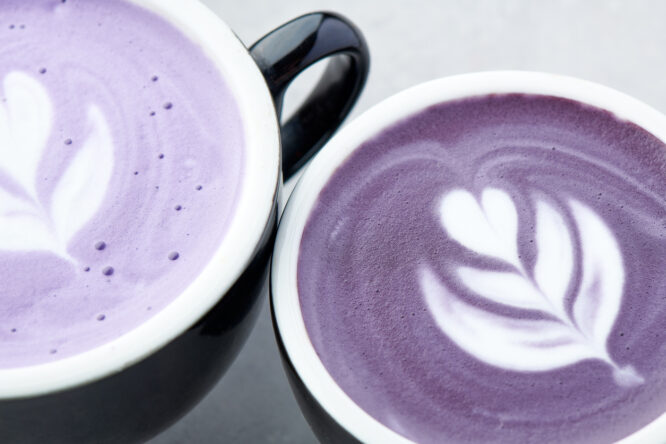
However, there’s a striking new option rapidly making its way onto independent coffee shop menus across the UK, and it’s quickly becoming the ultimate choice for adventurous caffeine lovers: ube. This eye-catching, pastel-coloured creation offers a completely different flavour profile to the earthy notes we’re used to, bringing a rich, unique sweetness to your daily brew.
If you’re looking to change up your usual afternoon order for something completely fresh, this beautifully distinct drink is proving to be a genuine contender for the summer’s biggest refreshment trend.
What ube actually is
If you’ve been seeing a mysterious purple drink popping up on Instagram and TikTok lately and wondering what on earth it is, the answer is ube. It’s pronounced “oo-bay,” and it’s a purple yam native to Southeast Asia, particularly the Philippines, India, and the French West Indies.
Ube is a thick, fleshy tuber that’s prized for its soft texture and naturally sweet, almost vanilla-like flavour. It’s been a staple in Filipino cooking for generations, where it’s traditionally used in puddings, ice creams, and pastries. The bit that’s got everyone hooked is the colour, which is properly purple in a way that food rarely is naturally. There’s no food dye involved, that vibrant shade is just what ube looks like when you cook it, which is part of the reason it photographs so well.
Why it’s catching up to matcha
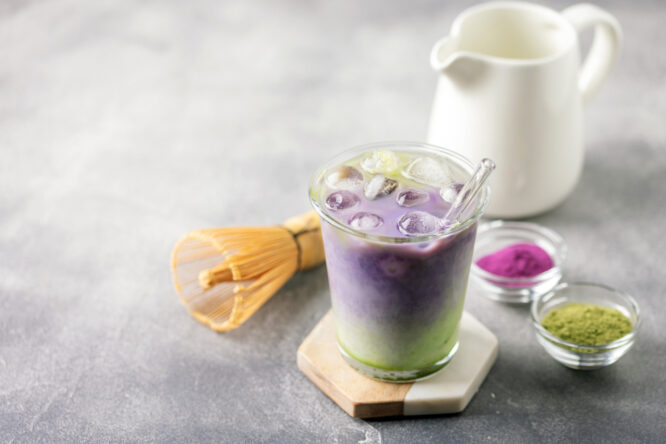
The honest reason ube is making such a dent in matcha’s territory is that ube actually tastes nice. Matcha has always been a bit divisive, with plenty of people quietly admitting they only drink it because it looks pretty rather than because they enjoy it. Ube doesn’t have that problem.
The flavour is naturally sweet, with a soft nuttiness and warm vanilla undertones, which makes it much easier on the palate than matcha’s grassy, slightly bitter profile. Add to that the fact that it doesn’t need much sugar to be drinkable, and you’ve got a drink that converts people on the first sip, rather than after they’ve forced themselves to acquire a taste for it.
The caffeine-free angle nobody’s talking about enough
This is the bit that might genuinely make ube the long-term winner. Plenty of people are quietly cutting back on caffeine, whether for anxiety, sleep, hormonal reasons, or just because they’re fed up with the afternoon crash. Until now, the caffeine-free options on a coffee shop menu were pretty grim, with most people stuck with herbal tea or hot water with lemon.
Ube changes that. It gives you the warm, cosy feeling of a fancy drink without any caffeine at all, and the natural sweetness means you don’t get a sugar crash either. People who switch from matcha to ube often report feeling steadier through the afternoon, with none of the wired, restless feeling that even matcha can sometimes produce.
The flavour and what to expect
If you’ve never tried ube before, the closest comparison is probably a cross between vanilla, sweet potato, and something faintly coconutty. The texture, when made into a latte, is creamier and silkier than matcha tends to be, which adds to the comforting feel. It pairs brilliantly with milk of any kind, including oat and almond, and it works hot or iced equally well.
Some cafes serve it with a swirl of cream on top, others keep it plain, and the better versions don’t drown the flavour in sugar because the ube itself is doing most of the work. The first sip tends to surprise people who were expecting something more dessert-like because despite the bright colour and sweet flavour, it’s actually quite mild and easy to drink.
Is it actually good for you?
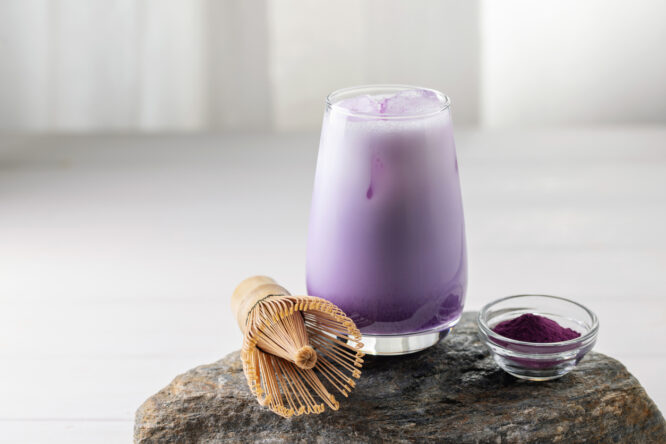
The drink isn’t just a pretty face. Ube is genuinely healthy, full of the same kind of antioxidants you’d find in blueberries and blackberries, which is partly what gives it that vivid purple colour in the first place. It’s also a really decent source of fibre, which most people are still falling short on despite all the noise about gut health. Filipinos have been eating it for generations without any issues, and there’s nothing about it that makes it unsuitable for daily drinking. The usual caveats apply, of course. If a cafe is loading the latte with sugar and syrup, that changes the picture, but the ube itself is doing nothing but good. As a daily drink, it’s about as kind to your body as anything you’d order from a coffee shop.
How it ended up everywhere
Ube’s journey from Filipino kitchens to global coffee shops has been quietly building for a few years. It started showing up in trendy bakeries in New York, then made its way into cheesecakes in the UK, lattes in Paris, and doughnuts in pretty much every city with a strong cafe scene.
Demand has actually grown so quickly that farmers in the Philippines are struggling to keep up. The trajectory looks a lot like matcha’s did about a decade ago, when it went from a Japanese tea ceremony staple to a global obsession in a few short years. Ube might just be on the same arc, only without the bitterness that puts so many people off matcha.
Where to actually try it
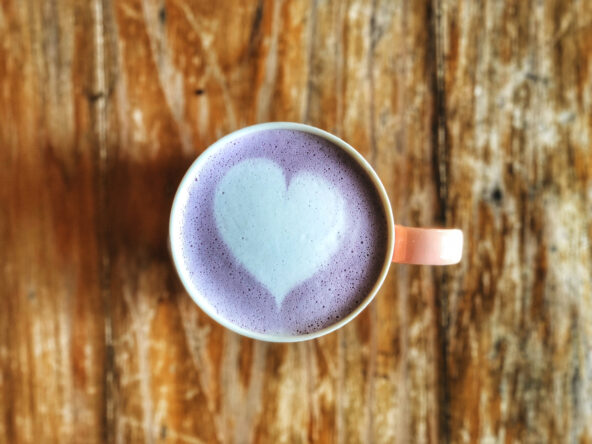
Ube lattes are popping up on independent coffee shop menus across the UK, particularly in London, Manchester, and Bristol, but they’re starting to spread further. Filipino-owned cafes were the first to serve them properly, and they’re still often the best places to try ube made well rather than as a trend version.
If you can’t find one nearby, ube purée and ube extract are now widely available online and at some larger Asian supermarkets, which means you can have a go at making one yourself. The recipe is essentially the same as a turmeric latte, but with ube purée or extract instead. Sweeten lightly, warm gently, and serve.
Will it actually replace matcha
Probably not entirely. Matcha has built up a serious cult following, and plenty of people genuinely love both the taste and the gentle caffeine boost it gives. But ube might quietly take over a chunk of matcha’s territory, especially among the people who were drinking matcha for the aesthetic rather than the flavour, and among those cutting back on caffeine. The two drinks aren’t really rivals so much as different options for different moods. Ube is for the cosy afternoon coffee break that won’t keep you up. Matcha is for the morning when you want something a bit more energising. There’s room for both.
If you’re tired of forcing down matcha because it looks good in a photograph, ube might be the drink you’ve been waiting for. It’s pretty, it’s properly tasty, it doesn’t need much sugar, and it won’t leave you wired at three in the afternoon. Whether it dethrones matcha or just sits beside it on the menu, the purple latte is here, and it’s not going away any time soon.