There’s nothing quite as satisfying as a full washing line flapping in the breeze on a sunny British day, as rare as those sometimes seem.
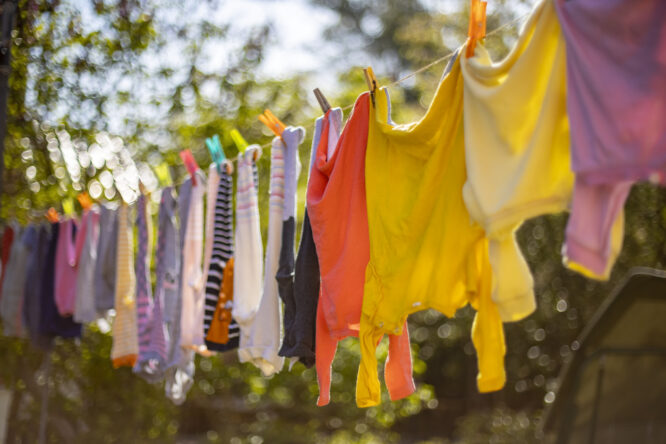
It’s cheaper than a tumble dryer, kinder to the planet, and there’s a particular smell to line-dried sheets that no fabric conditioner can match. But hanging your clothes out the wrong way can quietly damage them over time, leaving stretched shoulders, faded colours and stiff, scratchy fabric. These are some of the most common washing line mistakes and how to avoid them, so your laundry actually benefits from a day in the sun.
Hanging dark clothes in direct sunlight
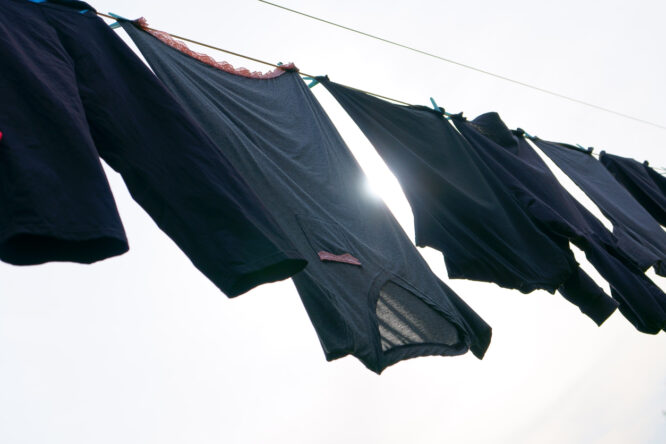
The biggest mistake people make on a sunny day is hanging absolutely everything in the brightest spot they can find. UV light is brilliant for bleaching whites naturally, brightening up bedsheets, towels and white shirts. But that same UV light is properly brutal on dark clothes, which fade noticeably with each session in direct sun.
The fix is simple. Save the sunny patches of the line for your whites, and hang darker items like jeans, black t-shirts and coloured shirts in the shadier sections. If your whole line is in full sun, turn dark and bright clothes inside out before pegging them up. The outside fades less, while the inside still dries normally.
Using the wrong pegs in the wrong places
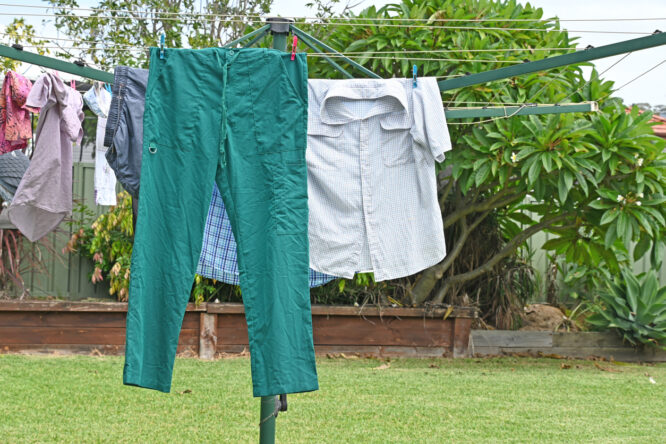
Pegs are the unsung culprits behind a lot of clothing damage. Cheap plastic pegs that grip too tightly leave little dents and “shoulder horns” on jumpers, t-shirts and tops. Old wooden pegs can stain pale clothes with brown marks if they’ve been left out in the rain. Rusty metal-spring pegs are worse still, since the rust transfers onto fabric and won’t always wash out.
Invest in decent, sturdy pegs that grip firmly without crushing the fabric, and bring them inside when you’re done. Where you peg matters too. Always hang shirts and tops from the bottom hem rather than the shoulders, so the peg marks land somewhere out of sight. Trousers, skirts, and shorts should be pegged from the waistband for the same reason.
Hanging stretchy knits the wrong way

If you’ve ever found that a favourite jumper has come back from the line with weirdly elongated shoulders, the washing line is the culprit. Wet wool, cotton knits and stretchy fabrics are heavy, and the weight pulls them out of shape if they’re hanging by their thinnest point. Once the fibres have stretched, they won’t always bounce back to their original size.
The solution is to fold knits and stretchy items in half over the line so they’re supported across their middle rather than hanging from their shoulders. Even better, use a flat drying rack outside for any delicate, stretchy or heavier knitted items. They’ll keep their shape and dry just as fast in a decent breeze.
Forgetting to shake clothes out first
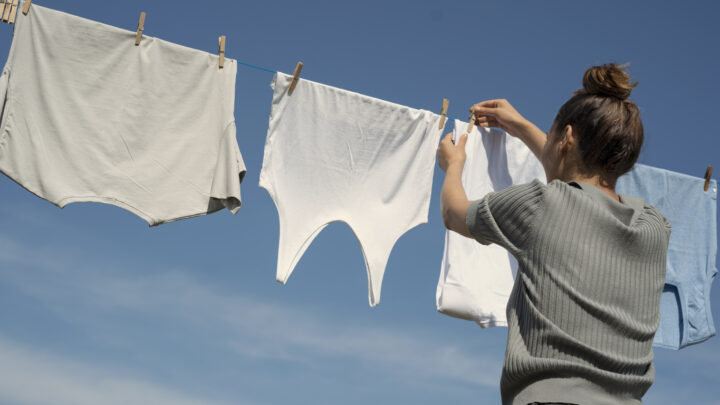
Modern washing machines, especially high-speed spinners, leave clothes a bit twisted and creased by the time they come out of the drum. If you peg them straight onto the line without shaking them first, they’ll dry in those wrinkles, and you’ll have an ironing pile that takes hours to flatten back out.
Give every item a firm shake before pegging, which releases creases and helps the fabric dry more evenly. Smooth out collars, cuffs, and hems with your fingers as you hang each piece. This simple habit can cut your ironing time in half, and some lightweight items will need no ironing at all if they’ve been hung properly.
Overcrowding the line

It’s tempting to cram as much washing onto the line as possible to get the whole load up in one go. However, clothes that are touching each other, or pegged too close together, don’t dry properly. They’ll stay damp where they overlap, which means a longer drying time and a higher chance of that musty, not-quite-fresh smell.
Leave a hand’s width of space between each item if you can. Heavy items like towels, jeans, and bedsheets need the most room since they take the longest to dry. If your line genuinely isn’t long enough for the whole load, dry the heaviest things first and rotate the lighter pieces through afterwards, rather than squashing everything on at once.
Not cleaning the line itself
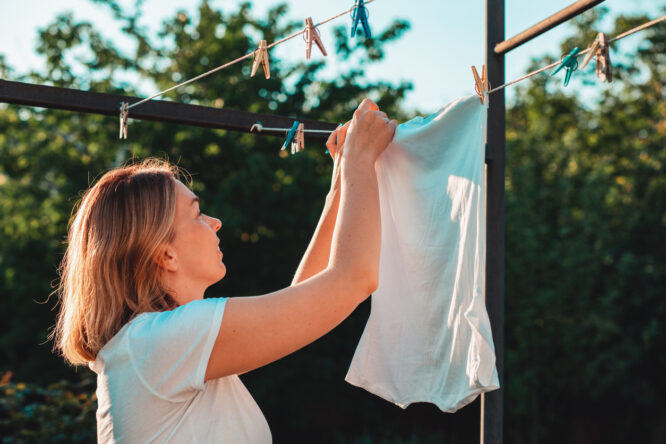
The line you’re hanging your nice clean washing on is sitting outside getting rained on, splashed with mud, dusted with pollen and pooped on by birds. Over a few months, even a brand new line picks up a properly grim layer of grime. If you peg wet white sheets straight onto a grubby line, you’ll get long brown or grey marks down the middle of them.
Give your line a quick wipe with a damp cloth before each use, especially after wet weather or a windy spell. A bit of warm soapy water once a month keeps it genuinely clean, and you can use a tiny bit of bleach on a really dirty plastic-coated line. It only takes a minute and saves your laundry from going back in for a re-wash.
Leaving washing out too long

A common mistake is forgetting about the washing once it’s out, especially on a busy weekend or if you head out for the day. Clothes left on the line past sunset get hit by the evening dew, which can leave them damper than when you put them out. Leave them overnight and they’ll be properly soaked again.
The same goes for surprise summer showers, which can wash pollen, grit, and even bird mess onto your nice fresh laundry. Bring everything in as soon as it’s dry, ideally before tea time on an average British day. Modern weather apps will give you a rough idea of when rain or dew might roll in, and a quick check before you head out for the afternoon saves a lot of disappointment.
Drying outside during pollen season
For anyone with hay fever, drying clothes outside during the worst of pollen season can be a properly miserable mistake. Wet fabric is brilliant at clinging to airborne pollen, so when you bring the washing in and wear it, you’re carrying pollen straight to your face. Cue itchy eyes, sneezing and a thoroughly unpleasant time.
If you’re a hay fever sufferer, check the pollen count before deciding whether to hang things outside. On high-count days, drying indoors on an airer or in a tumble dryer is the kinder choice. Even if you’re not bothered by pollen, washing left out near busy roads can pick up traffic grime that quietly grubbies up your fresh clothes.
Using too much detergent in the first place

If your line-dried clothes are coming back stiff, scratchy or weirdly crunchy, the problem might not be your line technique at all. It’s most likely down to using too much detergent in the wash. Excess soap doesn’t fully rinse out, so it dries into the fibres and leaves them feeling rough once the air has stiffened them up.
Use the smaller amount on the cap rather than the larger one, and consider running an extra rinse cycle now and then if your clothes feel residue-heavy. Adding a small splash of white vinegar to the rinse drawer also helps neutralise hard water, which is the other big cause of crunchy line-dried laundry. Your sheets will come back soft, fresh and feeling brilliant against the skin.
How to actually get the best out of your washing line
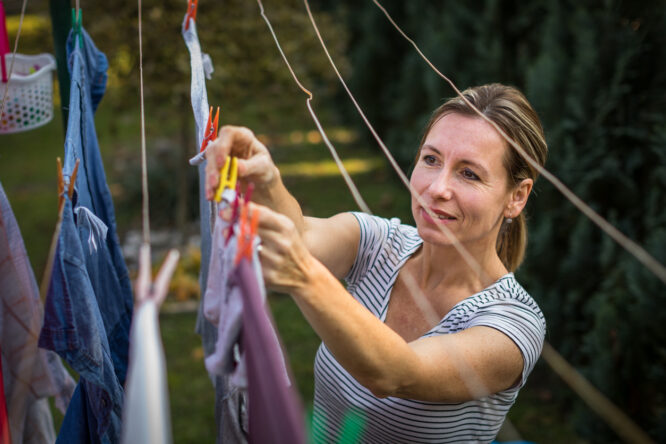
A well-used washing line will save you serious money over a year compared to running a tumble dryer, especially with the price of electricity these days. The trick is paying just a bit of attention to how you hang things rather than chucking them on willy-nilly. Sort lights and darks, peg things from the right end, shake everything out first, leave a bit of breathing room between items and bring the lot in before the evening cool sets in.
A drying day done well also means properly fresh-smelling clothes, less ironing, less fading and clothes that last longer overall. None of these little tweaks take any real time once you get into the habit. Within a few weeks, you’ll be a quietly more efficient laundry-doer, your washing will look better for longer, and you’ll have one less thing to grumble about when the sun comes out.