While we’ve seen our fair share of celestial events lately, the solar eclipse hitting the skies this August is carrying a level of hype that’s actually backed up by the data.
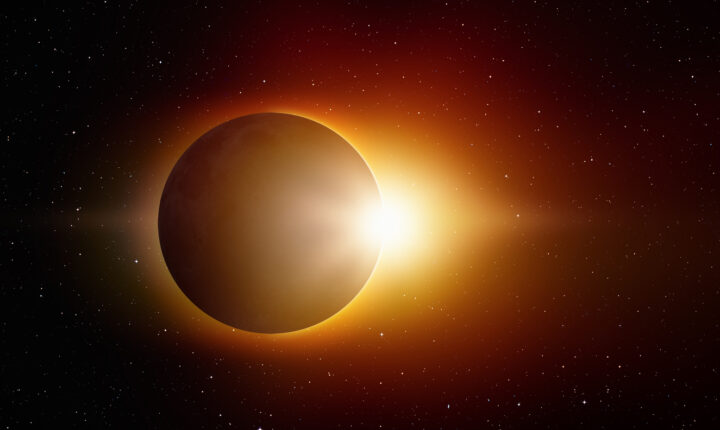
This isn’t just another “blink and you’ll miss it” moment or a partial shadow that requires a telescope to appreciate. For the first time in decades, a massive path of totality is going to sweep across Europe, turning mid-afternoon into an eerie, chilled twilight. It’s being labelled a once-in-a-generation event because of the sheer scale and the perfect alignment required to pull off a show this dramatic so close to home.
If you’ve spent years looking at grainy photos of eclipses from the other side of the world, this is the moment where the universe is finally putting the spectacle right on your doorstep. Understanding why the timing and the geography of this specific shadow are so rare helps explain why people are already booking up every available square inch of the viewing path.
What’s actually happening
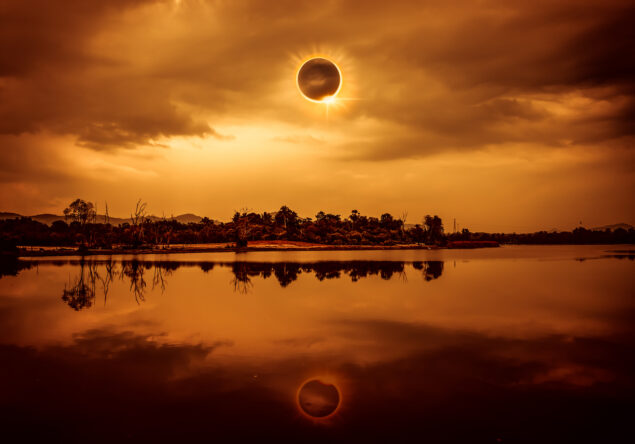
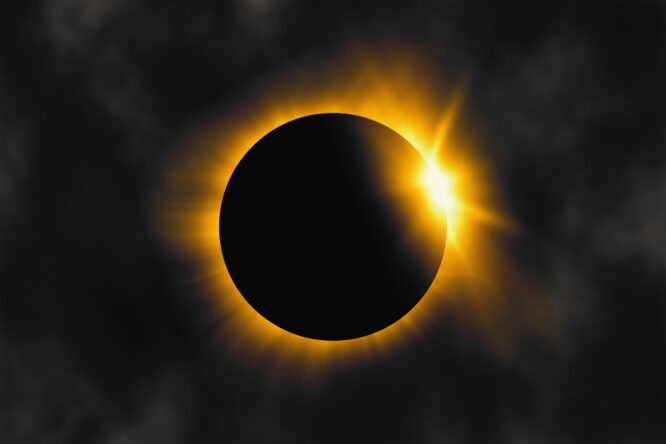
A total solar eclipse occurs when the Moon passes directly between the Earth and the Sun and blocks out the light completely, if only for a matter of minutes. It’s not the same as a partial eclipse, which just dims things a bit. During totality, the sky goes dark in the middle of the day, the temperature drops noticeably, stars become visible, and the Sun’s outer atmosphere, called the corona, appears as a glowing ring around the darkened disc.
It’s the kind of thing that stops people in their tracks. The 2026 eclipse will sweep across the Arctic, Greenland, Iceland, and northern Spain, with a narrow corridor of totality stretching roughly 290 kilometres wide. For everyone inside that corridor, totality will last up to two minutes and eighteen seconds.
Europe hasn’t seen this since 1999.
The last total solar eclipse visible from mainland Europe crossed the continent in August 1999, which means anyone under their mid-thirties has never experienced one. That’s already a major thing, but what makes 2026 stand out further is where the path of totality falls. Spain is in the direct line, and for Spain, this is genuinely extraordinary.
The last total solar eclipse to cross that country happened in 1905. That’s 121 years between events. For Iceland, it’s been even longer. The country last saw totality in 1954 and won’t see it again until 2196, which means this is the only total solar eclipse Iceland will experience in the entire twenty-first century. Those kinds of gaps are what give events like this their weight.
The Moon’s position makes this one extra special.
Not all total solar eclipses are equal, and the reason this one is being talked about so much comes down to timing. The eclipse falls just two days after the Moon reaches perigee, which is the point in its orbit where it’s closest to Earth. When the Moon is closer to us, it appears larger in the sky.
A larger Moon means a more complete and dramatic covering of the Sun, a longer period of totality, and a more vivid corona. It’s the difference between a quick blackout and a proper, breathtaking moment of darkness. Astronomers are calling it one of the longest total eclipses in a generation for Europe specifically, and the conditions are about as good as they realistically get for this part of the world.
Where to watch it from
The path of totality runs from the Arctic Ocean through Greenland and down through Iceland before hitting northern Spain and a tiny corner of northeastern Portugal. Iceland is being treated as the prime destination because the eclipse happens in mid-afternoon there, giving viewers the Sun at a reasonable height in the sky rather than awkwardly low on the horizon.
The western cliffs of Látrabjarg in Iceland are expected to attract enormous crowds, and authorities are already making plans around the roads because many routes out there are narrow and genuinely difficult to navigate at high traffic volumes.
Northern Spain, particularly Galicia and the surrounding regions, is the other big draw, though the Sun will be fairly low in the sky by the time totality hits, sitting just a few degrees above the horizon in some locations. That creates a more cinematic, dramatic viewing angle but also means any cloud cover or terrain could block the view.
For people across the rest of the UK and Europe, a partial eclipse will still be visible, with a noticeable chunk of the Sun obscured in the late afternoon.
It coincides with the Perseid meteor shower.
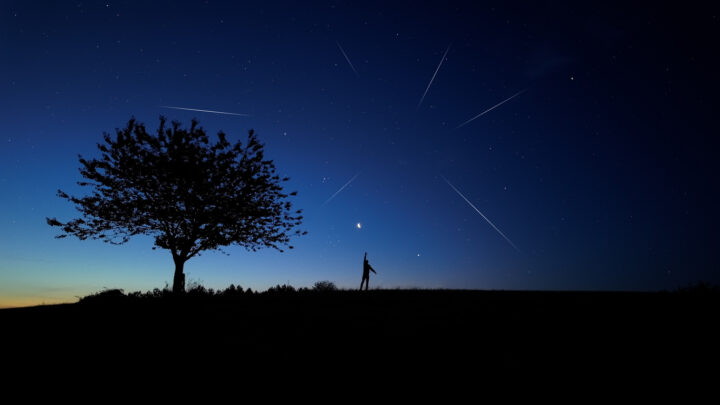
This is the detail that’s genuinely tipping people over into making travel plans. The Perseid meteor shower, one of the most reliable and spectacular annual events in the sky, peaks every year around the 12th of August. In 2026, the shower and the eclipse fall on exactly the same day.
After the eclipse ends, anyone in a dark enough location could look up that same evening and watch up to sixty meteors an hour streaking across the sky. Two major celestial events on the same date is unusual enough that eclipse chasers and astronomers are treating the whole day as something close to unmissable.
It’s the start of something bigger.
What makes 2026 feel especially significant is that it kicks off a three-year run of total solar eclipses that astronomers are already calling a golden age. Three separate total eclipses are happening between August 2026 and July 2028, each crossing a different and mostly accessible part of the world.
The 2027 eclipse cuts through southern Spain, Morocco, Egypt, and parts of the Middle East, with a totality duration of over six minutes in some locations, which is exceptionally long. The 2028 eclipse crosses Australia and New Zealand. This kind of clustering happens rarely, and the three eclipses together are being described as the most travel-friendly set of consecutive total eclipses in decades. The 2026 event is the opening act.
Why seeing one in person changes things
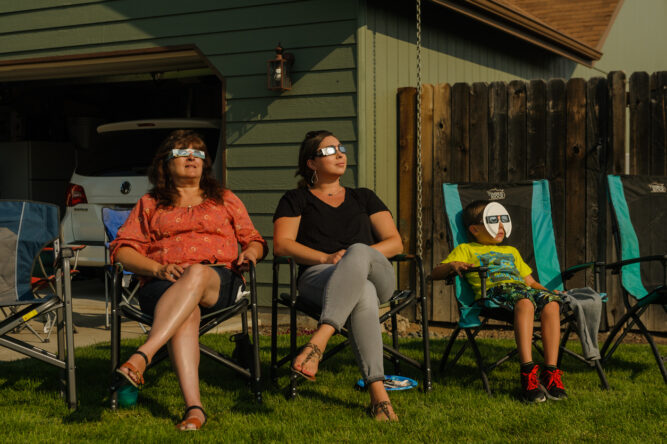
People who’ve witnessed a total solar eclipse tend to describe it with a seriousness that can sound over the top until you understand what’s actually happening. From any fixed point on Earth, a total solar eclipse comes around roughly once every four hundred years on average. The specific combination of the Moon’s size relative to the Sun, and the alignment needed to block the light completely, is a coincidence of distances that won’t exist indefinitely.
The Moon is very slowly moving further from Earth and will eventually be too small in the sky to produce total eclipses at all. Scientists estimate that around 600 million years from now, total solar eclipses will stop happening. That sounds like a long way off, but it does mean that being alive now, in a time when total eclipses are still possible, is something worth noticing.
The 12th of August 2026 is a Wednesday. If you’re based in the UK, a long weekend to Iceland or northern Spain isn’t out of the question, and given that the next chance to see something like this from anywhere nearby is a very long time away, it might just be worth it.