Oats have been recommended for heart health for years, but recent research has pushed them back into the spotlight with a claim that feels almost too good to be true.
In a small study published in Nature Communications, people saw their cholesterol levels drop within as little as 48 hours after switching to a diet built heavily around oats. Of course, that doesn’t mean a single bowl of porridge is going to fix everything overnight, but it does show how quickly your body can respond when you give it the right kind of fuel.
The reality sits somewhere in the middle. Oats can have a meaningful impact, but only when you understand how they work and what role they actually play in a wider diet.
Fast results are possible, but only in controlled setups.

When you hear that cholesterol can drop within two days, it’s based on a study where a small group of people followed very specific eating patterns. In those cases, oats weren’t just added to meals—they became a central part of the diet, often replacing foods that would normally contribute to higher cholesterol levels.
That detail is important. Removing foods high in saturated fat while increasing fibre intake creates a double effect. Cholesterol intake drops at the same time as your body is actively removing more of it, which is why the change can happen so quickly. In everyday life, where diets are less controlled, the same process still happens, but it tends to be slower and more gradual.
Beta-glucan is the part doing the heavy lifting.

The reason oats stand out compared to other grains comes down to beta-glucan, a type of soluble fibre that behaves very differently once it reaches your digestive system. Instead of simply passing through, it forms a thicker, gel-like layer in your gut.
This layer slows down digestion and binds to bile acids, which are made using cholesterol. When those acids are removed rather than reabsorbed, your body has to draw on cholesterol in your bloodstream to replace them. Over time, this process lowers LDL cholesterol levels in a way that’s been consistently backed by research. It’s not anything major in the moment, but it’s reliable when repeated daily.
Your gut plays a bigger role than most people realise.

There’s more going on than just fibre physically trapping cholesterol. Oats also feed beneficial bacteria in your gut, and those bacteria produce compounds that can influence how your body processes fats and regulates inflammation.
This adds a second layer to the effect. It’s not just about removing cholesterol, it’s about creating an environment where your body handles it more efficiently. In the long run, that can contribute to better overall heart health, even beyond what you’d expect from diet alone. It also helps explain why consistent intake matters more than short bursts.
Portion size and consistency make the difference.

One of the biggest misunderstandings is how much you actually need to eat to see a benefit. The key figure often mentioned is around 3 grams of beta-glucan per day, which usually means a full serving of oats, not just a small topping or occasional portion.
It also needs to be consistent. Eating oats once or twice a week won’t have the same effect as making them a regular part of your diet. The body responds to patterns, not one-off changes, so it’s the routine that creates the change rather than any single meal.
Not all oat-based foods deliver the same results.
There’s a big difference between plain oats and heavily processed oat products. Instant oat sachets with added sugars or flavoured oat snacks often contain less of the fibre that actually helps, and more ingredients that work against heart health.
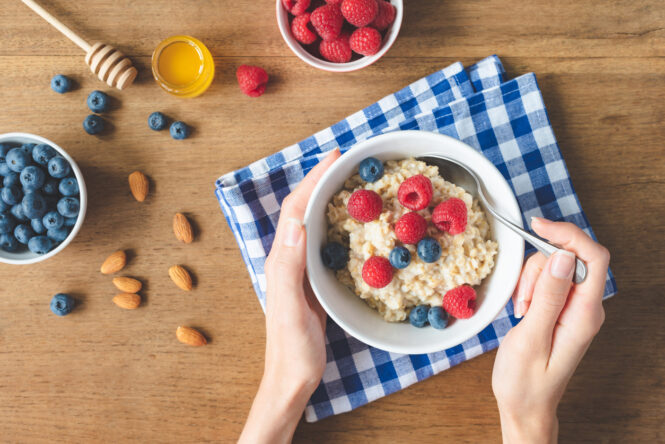
Choosing simple forms like rolled oats or steel-cut oats keeps the focus on what makes them effective in the first place. The less interference from added sugars and processing, the more consistent the benefit tends to be.
The real impact comes from what oats replace.

One of the strongest effects comes from using oats to replace less helpful foods. Swapping out sugary cereals, pastries, or heavy breakfasts for oats reduces the intake of ingredients that can raise cholesterol while introducing something that actively lowers it.
That change in balance is what makes the biggest difference. It’s not just about adding a healthy food, but about changing the overall direction of your diet in a way your body can respond to. As time goes on, that’s what leads to more meaningful and lasting improvements.