The UK has finally updated its paternity leave rules to give dads a bit more flexibility, but many are questioning if these tweaks go anywhere near far enough.

While the new system allows for more choice in how and when that time is taken, the underlying issues of pay and genuine support haven’t really been touched. It feels like a step in the right direction, but for most families, it’s a case of wondering whether these changes actually make a dent in the reality of modern parenting. Here’s how things are different and what the changes mean for new parents.
What actually changed on 6 April

From this week, dads and partners now have the right to take paternity leave from their first day in a new job, rather than having to wait six months to qualify. On the surface that sounds straightforward and fair, but the detail matters. The two weeks of leave is available from day one, but it only becomes paid leave once you’ve been with an employer for more than 26 weeks.
If you’re newer than that, you can take the time off, but you won’t receive the statutory pay that comes with it, currently £194 per week or 90% of your earnings, whichever is lower.
Why the old rule was a problem

Before this change, fathers who started a new job while their partner was pregnant were in an impossible position. If they hadn’t hit the six-month threshold by the time their baby arrived, they had no entitlement to paternity leave at all. Many ended up using annual leave instead, which sounds like a reasonable workaround until you consider that annual leave is the same pot of days they’d need later for childcare, illness, and the relentless logistical demands that come with a new baby.
Oliver, a dad from Gloucester who found himself in exactly this situation, put it plainly: losing that annual leave to cover what should have been paternity leave isn’t fair, and it leaves families worse off for months afterwards.
There’s relief and frustration at the same time

Most dads and campaigners are welcoming the change because it does fix something that was genuinely unjust. But the overwhelming feeling is that it doesn’t come close to addressing the bigger problem. A survey of 1,000 working parents by MATRI Coaching found that 42% don’t think the current paternity leave rules go far enough, and a further 27% described them as not fit for purpose.
Elliott Rae, founder of Parenting Out Loud, called the changes much needed, but was clear that dads should never have had to fight for something this basic in the first place. His broader point is one that resonates with a lot of families: the UK still hasn’t caught up with the idea that fathers are equal partners in parenting, not optional extras.
Two weeks is the real issue

Fixing the eligibility problem is one thing, but the length of paternity leave remains the bigger grievance. Two weeks is what UK dads are entitled to, and that hasn’t changed. Many parents and organisations are pushing for a default of six weeks, arguing that two weeks is barely enough time to adjust to a newborn before one parent is expected to return to work.
For context, countries like Sweden offer up to 90 days of dedicated paternity leave, and several other European nations offer far more generous provision than the UK. Simply put, the UK offers the worst paternity leave in Europe, and fixing the day-one eligibility rule, while welcome, doesn’t change that position meaningfully.
What dads actually want
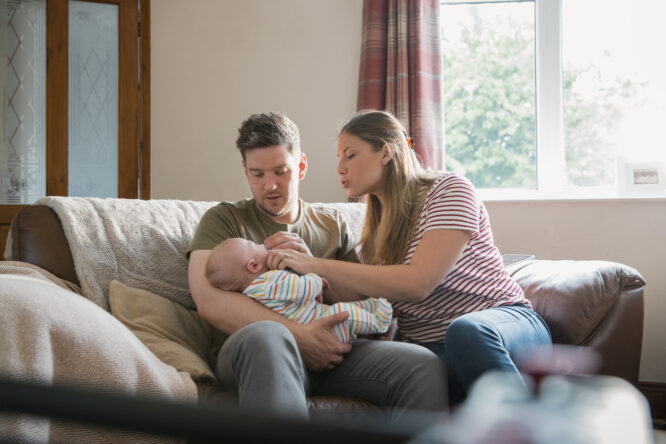
It’s worth saying clearly that most dads want to be present. The narrative that paternity leave is somehow less important because fathers are less central to early childcare doesn’t hold up against what working parents actually report. Dads want to be there, and many are held back not by their own priorities but by policy, workplace culture, and financial pressure.
Statutory paternity pay of £194 a week is not enough for most households to absorb comfortably, which means many fathers feel they can’t afford to take even the two weeks they’re entitled to. The gap between the right to leave and the practical ability to take it is where a lot of families quietly fall through.
Something bigger is building

Hundreds of dads and partners are planning to take part in a Push for Paternity pram march on 2 May in London, Leeds, and Manchester, specifically to push for a fairer system. The fact that this kind of organised pressure is building suggests the conversation isn’t going away.
The changes this week are a step, and they’re a real one, but campaigners are clear that the momentum needs to carry forward into something more substantial. Extending the default entitlement, increasing statutory pay to a level families can actually live on, and changing the cultural expectation around fathers in the workplace are all part of what needs to happen next.
Where this leaves families right now

If your partner is pregnant, and you’ve recently started a new job, the picture from this week is better than it was last week. You now have a legal right to take two weeks off from day one, even if the pay situation is more complicated depending on how long you’ve been in post.
It’s worth checking your employment contract and speaking to your HR team about how the new rules apply to your specific situation because the distinction between the right to leave and the right to paid leave is an important one that not every employer will communicate clearly. For most families, though, the honest reality is that two weeks, whether paid or not, is a very short window in which to navigate one of the biggest changes your household will ever face.