Most people who run regularly will tell you the same thing if you ask them honestly: they didn’t start out enjoying it.

They started out red-faced, slightly out of breath after two minutes, and wondering what on earth they’d signed themselves up for. Then something changed, and now they can’t imagine not doing it. Most of us have spent a fair bit of time watching people jog past the window while we’re having a tea, wondering what on earth is actually driving them. It looks a bit exhausting, and you’ve probably told yourself a dozen times that your knees just aren’t up to the task, right?
The truth is that there’s a reason you see so many people out on the pavement every morning, and it’s usually more than just wanting to fit into an old pair of jeans. If you’ve been hovering by the door with a dusty pair of trainers, wondering if today is the day you finally take the plunge, there are some pretty solid arguments for why that first mile is worth the effort.
You need nothing and it costs nothing.
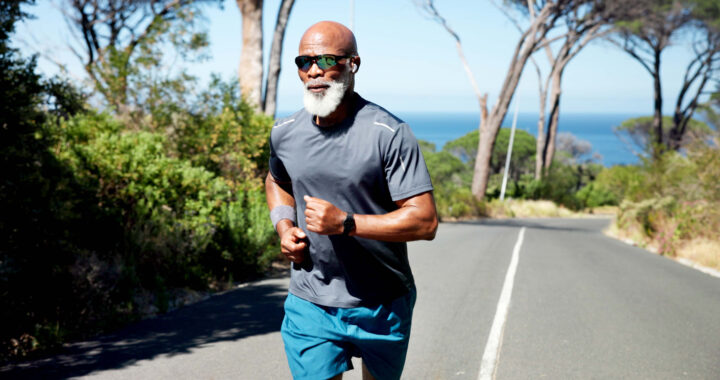
No gym membership, no class to book, no equipment beyond a decent pair of trainers. You put your shoes on and you go. That sounds obvious, but it’s genuinely important because the biggest reason most people fall off exercise routines is that there’s too much friction between deciding to go and actually going.
Running removes almost all of it—bad day at work, it’s seven in the evening, you’ve got half an hour. That’s enough. You don’t need to plan ahead or rearrange your life around it. Most people who stick at it long-term say the simplicity is a big part of why it works for them when other things didn’t.
It does something noticeable for your mood and fairly quickly.

The endorphin thing is real, but it’s not the whole story. Running also triggers the release of chemicals in the body that produce a genuine feeling of calm, and over time it increases the production of serotonin and dopamine, which are the things your brain uses to regulate mood. Most people who start running regularly notice a difference in how they feel within a few weeks, not months. You become sharper, less irritable, sleeping better, less likely to spiral about things.
The research on running and mental health is consistent enough that some studies have found it as effective as medication for mild to moderate depression, though that’s not an argument for ditching professional support, just a measure of how impressive the effect can be. For a lot of people, this ends up being the main reason they keep going, not the physical stuff at all.
Your heart will genuinely thank you for it.

Running is one of the best things you can do for your cardiovascular health, and the evidence on this is pretty solid. It lowers resting heart rate, brings blood pressure down, improves cholesterol, and meaningfully reduces the risk of heart disease over time. The interesting thing is you don’t have to be doing a lot of it for the benefits to kick in.
Studies have found that even five to 10 minutes a day at a slow pace is associated with a noticeably reduced risk of dying from cardiovascular causes compared to not running at all. You don’t have to be training for a marathon. You just have to be doing something, consistently, and running is one of the most efficient ways to do that.
It teaches you something about yourself that’s hard to learn any other way.

At some point in most runs, particularly when you’re pushing a bit further than usual, your body starts making a pretty compelling case for stopping. Learning to keep going past that point, knowing it’s temporary, is something that quietly builds over time into a kind of mental toughness that shows up in the rest of your life too.
People who run regularly tend to handle stress better and push through difficult things more easily, not because running is some kind of life philosophy, but because they’ve practised tolerating discomfort in a very practical and repeatable way. That’s not nothing.
Your sleep will probably improve.

This one surprises people, but it’s consistent. Regular running helps your body regulate its internal clock, gets you into deeper sleep more reliably, and reduces the amount of time you spend lying awake at night. Research has found that people who exercise regularly are far more likely to report sleeping well and feeling rested.
If you’ve ever had a run in the morning and noticed you crashed particularly well that night, that’s why. The main thing worth knowing is that running quite late in the evening doesn’t work for everyone. Some people are fine with it, but others find it winds them up rather than down. Worth experimenting with the timing if sleep is something you’re trying to improve.
It genuinely helps with weight management in a way that sticks.

Running burns more calories than most other common forms of exercise, which is straightforward enough. But the more interesting thing that happens over time is that regular runners tend to develop a better relationship with food generally, thinking about it more as fuel than as something to feel complicated about.
That change takes time, but it’s one of the more lasting benefits. It’s worth being honest that running alone, without any attention to what you’re eating, tends not to produce dramatic results on the scales. However, as part of a broader approach it’s one of the more effective tools going, and the metabolic benefits carry on even on the days you’re not running.
The running community in the UK is far more welcoming than you’d expect.

Parkrun is free, takes place in hundreds of locations every Saturday morning, is timed but not competitive, and has over two million registered participants in the UK. The culture at most running clubs and events is genuinely encouraging rather than intimidating, largely because everyone there remembers what it felt like to start out.
The NHS Couch to 5K app was specifically built for people who don’t consider themselves runners and takes you from walking to running five kilometres over nine weeks at a pace that most people find genuinely manageable. The infrastructure for getting started has never been better, and the community aspect is, for a lot of people, the thing that turns a solo habit into something they actually look forward to.