The question of Scottish independence is not a theoretical exercise.
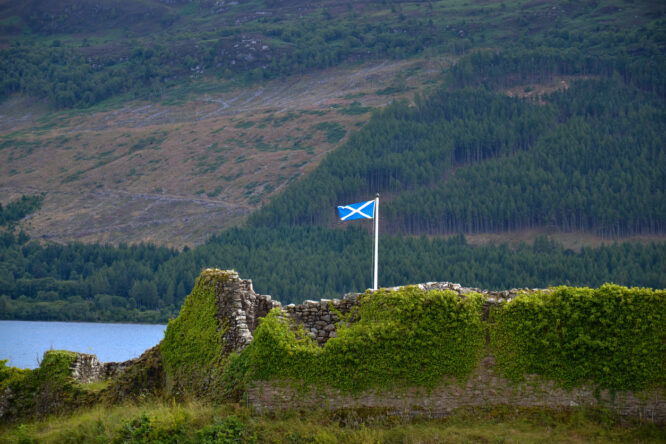
It’s a live political debate with a specific and contested path to resolution, and the detail behind what independence would actually mean in practice is considerably more complex than either side tends to acknowledge in public. Scotland has its own parliament, its own legal system, its own education system, and a government that has been actively publishing detailed proposals for independence since at least 2013. Here’s what the evidence, the research, and both sides of the debate actually say about what would happen.
Where the debate currently stands

In September 2014, Scotland voted on independence and 55% chose to remain in the United Kingdom. The result was close enough to keep the question very much alive. Over a decade on, the Institute for Government notes that nearly half of Scottish voters consistently say they would vote yes in a second referendum if one were held. Support for independence has reached 54% in some recent polling, the highest level in four years.
The SNP, which governs Scotland, agreed a strategy in October 2025 stating that winning a majority of seats in the 2026 Scottish Parliament election would give them a mandate for a second referendum. However, the UK Supreme Court ruled definitively in 2022 that the Scottish Parliament cannot hold a referendum on independence without Westminster’s approval, and in November 2025 Chancellor Rachel Reeves confirmed there would be no independence referendum even if the SNP won a majority. The legal and political path to a second vote remains blocked unless the UK government agrees to it.
The deficit problem is the hardest number in the debate.

The most notable financial challenge facing an independent Scotland is its budget deficit. Analysis by the Scottish Government published in August 2025 found that Scotland’s notional government deficit stood at 11.6% of GDP in 2024 to 2025. The Institute for Government notes that public spending per person in Scotland was around £4,700 higher than tax revenue per person in that same period.
This gap is currently filled by the Barnett Formula, the mechanism by which the UK government distributes funding across Scotland, Wales, and Northern Ireland based on population. Under independence, Scotland would lose this redistribution and would need to either raise taxes, cut spending, or borrow far more to balance its books.
The Institute for Fiscal Studies has been direct about the implications: an independent Scotland would likely need to make bigger cuts to public spending or bigger increases to taxes in the first decade following independence than the rest of the UK would face. The Scottish Government disputes this framing, arguing that independence would allow it to make different economic choices that would grow revenues over time. Both things can be true, but the short-term challenge is real regardless of the longer-term potential.
The currency question has no clean answer.
What currency would an independent Scotland use? This remains the most contested and least resolved aspect of the independence debate. The Scottish Government’s current proposals involve initially using the pound sterling informally, without a currency union, before eventually transitioning to a new Scottish pound with its own central bank. A new independent Scottish Central Bank would advise on the timing for launching the Scottish pound.
Using sterling informally, as some smaller countries do with other currencies, would mean Scotland has no control over its own interest rates or monetary policy. It could not respond to economic shocks through quantitative easing or adjust exchange rates to support exports. The UK Government made clear during the 2014 referendum campaign that it would not enter a formal currency union with an independent Scotland. Creating an entirely new currency carries its own risks, including potential volatility in the transition period and the practical complexity of converting existing mortgages, contracts, and savings currently denominated in sterling.
Trade with the rest of the UK is the central economic risk.
The rest of the UK is by far Scotland’s most important trading partner. In 2021, the most recent year for which figures are available, the UK accounted for 61% of Scottish exports. Scotland’s sales to the rest of the UK are worth more than three times its exports to the EU.
Research from the Economics Observatory suggests that border costs between Scotland and the rest of the UK, if Scotland were to become independent and rejoin the EU, could increase by 15 to 30%, comparable to the expected effects of Brexit on trade costs between the UK and the EU. Independent economic analysis suggests that EU membership would not offset Scotland’s economic losses from increased border costs with the rest of the UK if a hard trade border were imposed.
The Scottish Government argues that re-joining the EU single market, which has 450 million consumers, would create many new trade opportunities that could compensate over time. Critics point out that the short-term disruption to Scotland’s existing trade relationships with England, Wales, and Northern Ireland would be immediate and intense, while the benefits of EU membership would take considerably longer to materialise.
A physical border with England would likely become necessary.

If Scotland rejoined the EU while England remained outside it, the Anglo-Scottish border would become an external EU border, requiring customs checks and controls on the movement of goods, just as the Northern Ireland situation required after Brexit.
The Scottish Government’s own independence papers acknowledge this, stating that meeting the requirements of the Single Market would require putting in place normal border arrangements. Scotland and England currently share a land border of around 154 kilometres. The practical and economic implications of a hard customs border on that stretch of land, particularly for businesses, farming, and everyday commuters who cross it regularly, would be substantial.
Scotland has considerable economic strengths that the independence case rests on.
The pro-independence case is not built on denial of the challenges. It rests on Scotland’s genuine economic assets and the argument that they are currently underutilised within the UK. Scotland accounts for roughly 80% of the UK’s total oil and gas production, though North Sea revenues have declined significantly from their peak and are on a long-term downward trend. Scotland has world-leading renewable energy resources, considerable financial services, tourism, food and drink exports including whisky, and a strong higher education sector.
The Scottish Government points to comparable smaller European nations, particularly the Nordic countries, whose per-person incomes are substantially higher than Scotland’s, as evidence of what a well-managed small independent economy can achieve. The counterargument is that those comparisons don’t account for the transition costs or the specific fiscal challenges Scotland would face in its early years of independence.
Nuclear weapons at Faslane would become an immediate and complex problem.

The UK’s entire nuclear deterrent, the Trident submarine fleet, is based at Faslane on the Clyde in Scotland. The Scottish Government has been unequivocal: nuclear weapons would have no place in an independent Scotland and would be removed as safely and quickly as possible after independence.
This creates an immediate and serious problem for the UK, which has no obvious alternative location for its nuclear fleet. Finding, preparing, and transferring a nuclear submarine base of Faslane’s scale to a new location in England or Wales would take years and cost billions of pounds. The negotiation around this point alone would be one of the most complicated elements of any independence settlement.
Scotland would need to build an entirely new set of state institutions.
Scotland already has many of the building blocks of a state, its own parliament, government, legal system, education system, and NHS. However, independence would require creating dozens of entirely new institutions and services currently provided at UK level. These would include a Scottish HMRC for tax collection, a Scottish Department for Work and Pensions to handle benefits and pensions, a Scottish border force, a separate intelligence agency, diplomatic embassies around the world, and its own armed forces.
The Scottish Government proposes creating a Scottish Security and Intelligence Agency alongside its own army, navy, and air force. All of this takes time, money, and considerable administrative capacity to build from scratch during what would already be an economically challenging transition period.
NATO membership is planned but not guaranteed and comes with a major complication.

The Scottish Government intends to apply for NATO membership immediately after independence and has committed to spending 2% of GDP on defence in line with NATO requirements. The application would be supported by Scotland’s strategic geographic importance, particularly its position guarding the Greenland-Iceland-UK Gap, a critical NATO corridor in the North Atlantic.
However, NATO is a nuclear alliance and Scotland’s intention to remove nuclear weapons from its territory while seeking membership creates a genuine tension. The Scottish Government argues that Finland joined NATO in 2023 without hosting nuclear weapons on its soil, demonstrating it is not a precondition for membership. Critics note that the circumstances are different and that the removal of a major ally’s nuclear arsenal creates complications that go beyond just where missiles are stored.
What would it mean for the rest of the United Kingdom

The consequences of Scottish independence for England, Wales, and Northern Ireland are rarely discussed in as much detail as the implications for Scotland itself. The rump UK would lose approximately 8% of its population, 32% of its landmass, around 60% of its coastline, and the entirety of its North Sea oil and gas production. It would need to find a new home for its nuclear deterrent.
Its permanent seat on the UN Security Council would almost certainly remain with the continuing UK rather than transferring to Scotland, as it did when the Soviet Union dissolved. The international standing of the UK would be diminished, but probably not catastrophically, given that a number of respected smaller independent countries retain considerable global influence well beyond their size.
The honest answer is that nobody knows exactly what would happen.
The evidence base for what Scottish independence would produce is genuinely contested, with credible economists and institutions on both sides making well-supported arguments that reach very different conclusions. What can be said with confidence is that the short-term economic disruption would be major, the transition period would be complex and expensive, the currency and trade questions have no easy answers, and the long-term outcome would depend heavily on decisions not yet made about fiscal policy,
EU membership, currency, and economic strategy. Whether Scotland would ultimately be better or worse off would depend on choices made over decades and on global economic conditions that nobody can predict. The 2014 vote was close, and the debate has not resolved since. The question of Scottish independence is likely to remain one of the most consequential and contested political questions in Britain for years to come.